Everybody loves the new car smell.
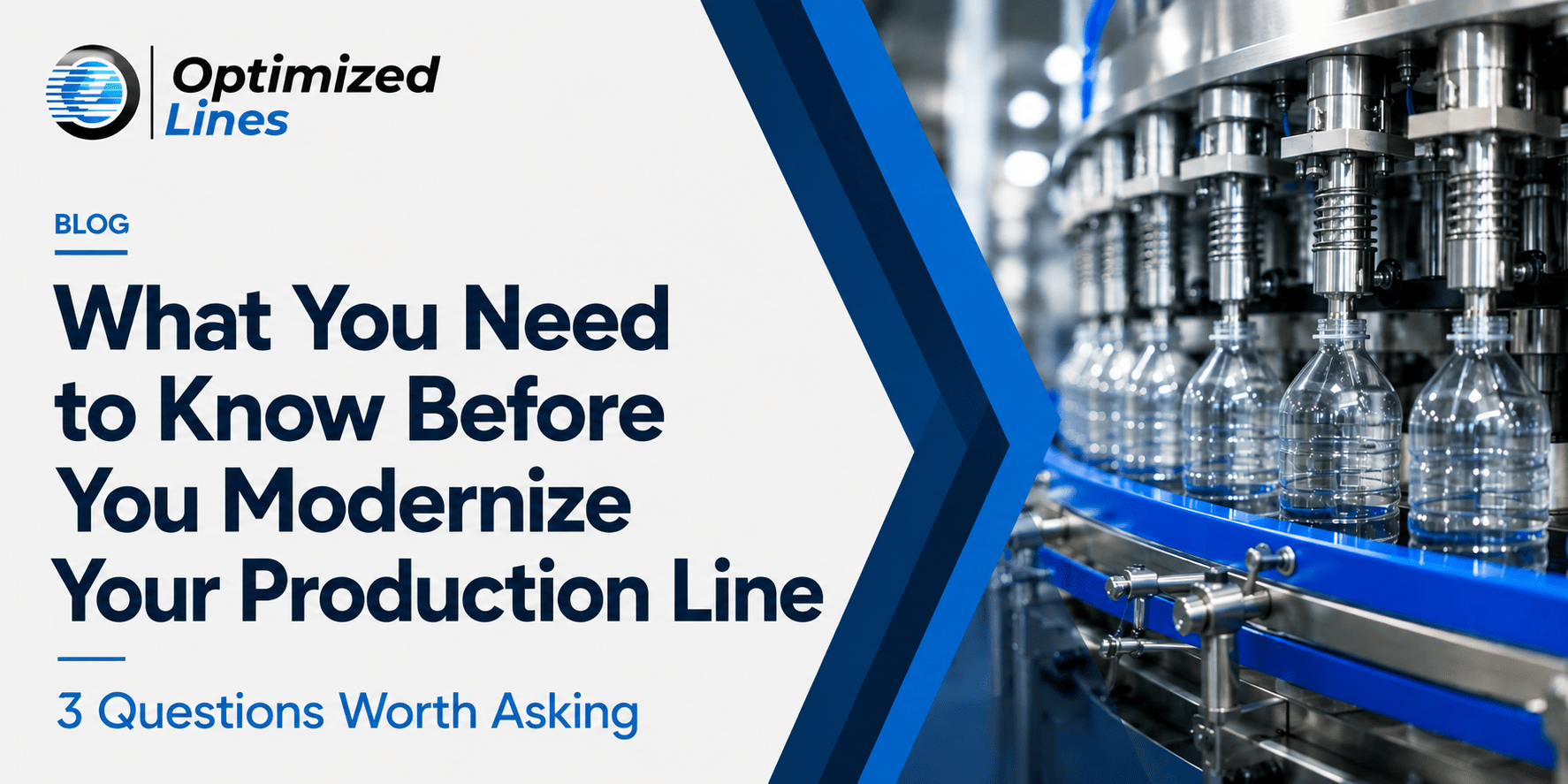
There is something satisfying about replacing something old with something new. And like a new engine promises performance. New equipment on the line promises a greater run rate. It feels like progress, and it can be, but only if you don’t overlook some key principles.
Modernizing a production line creates that new car feeling. New PLCs replace obsolete hardware. Variable frequency drives are updated. HMIs are modern and there are replacements on the shelf if one goes bad. Equipment manufacturers promise greater reliability and fewer maintenance issues. The investment feels like the right decision because it solves a very visible problem.
The challenge is that new hardware does not automatically create better production.
Imagine installing a brand-new engine into a truck with worn brakes, misaligned wheels, a slipping transmission, and a suspension that’s been neglected for twenty years. The engine may be capable of delivering far more performance, but the rest of the vehicle limits what it can actually do. Until those underlying problems are fixed, the new engine never reaches its potential.
We see manufacturers make this same mistake with production line modernization.
Not long ago, we had conversations with two different beverage manufacturers facing almost the same decision. One had spent about $2 million modernizing its production line and called us after the project was complete to fix throughput problems. The other was early in the process designing its modernization project but they called us before any new hardware was on the way. The results for the second group were vastly different than the first due to the fact that we helped them avoid key issues that cause modernization projects to fail to deliver the performance plants expect.
Modernization replaces obsolete equipment. Optimization improves how the production line performs. When the two are separated, manufacturers often spend a substantial amount of money only to discover the line still struggles with the same bottlenecks, the same downtime, and the same throughput limitations they had before the project began.
Before you modernize your production line, there are three questions worth asking.
Instead of talking about modernization itself, let’s talk about programming.
Many modernization projects rely on automated conversion tools that transfer an existing PLC program into a newer controller. From a project management perspective, it makes sense. It saves engineering time and reduces startup risk.
Unfortunately, it also copies every shortcut, temporary fix, undocumented modification, and programming decision that’s accumulated over the last twenty years.
We have walked into plants where the controls were brand new, yet production performance hadn’t changed at all. The hardware had improved, but the software was still carrying the same problems it had before the upgrade.
Modernization should be an opportunity to ask a different question.
Instead of asking, “How do we convert the old program?” ask, “How should this production line operate today?”
Those are two very different engineering conversations.
One preserves the past.
The other builds a better future.
One of the biggest missed opportunities in a production line modernization isn’t what gets installed. It’s what never gets used.
Today’s automation platforms include features that can make maintenance easier, reduce downtime, and simplify troubleshooting. Yet many modernization projects stop once the new hardware is communicating and production is running again. The project meets its deadline, but the plant never takes full advantage of what the new technology can do.
Take variable frequency drives, for example. Modern drives can be configured as plug and play devices. When one fails, a maintenance technician can disconnect the old drive, install the replacement, reconnect it, and return the machine to service without calling in a controls engineer to reprogram it. That may save hours of downtime during an unexpected failure.
Unfortunately, many projects are completed using the quickest path possible. The old configuration is copied into the new equipment, basic functionality is confirmed, and the line is returned to production. The advanced capabilities that justified the investment are never configured.
This happens more often than people realize because the project is measured by whether the line starts, not whether it performs better six months later.
A successful modernization should do more than replace obsolete components. It should make the line easier to operate, easier to maintain, and easier to keep running.
That only happens when someone steps back and asks how the equipment should work together instead of simply replacing one piece at a time.
Many modernization projects create another problem that doesn’t show up until after the contractor leaves.
The line is running, but no one in the plant understands how the new controls work.
Over the years, we’ve seen maintenance technicians become frustrated by programs that feel like black boxes. The software is filled with advanced programming structures that helped the original programmer finish the project faster, but they make troubleshooting far more difficult for the people responsible for keeping the line running every day.
When production stops at two o’clock in the morning, your maintenance team doesn’t need elegant programming. They need code they can understand.
They need documentation that matches the machine.
They need standardized programming that looks familiar whether they’re troubleshooting the filler, the conveyors, or the palletizer.
Most importantly, they need confidence that they can solve problems themselves instead of waiting for an outside programmer to return their phone call.
That’s one reason we approach modernization differently.
Rather than copying decades of programming changes into a new controller, we write controls around how the line should operate today. We document that operation, standardize the programming, and train the maintenance team on the finished system. The goal isn’t simply to install new hardware. It’s to leave the plant with a control system the people inside the facility can understand and support for years to come.
When your maintenance team owns the system, downtime goes down, troubleshooting gets faster, and small problems are less likely to become production losses.
Replacing obsolete hardware is often necessary. Components become difficult to find, support disappears, and the risk of extended downtime continues to grow. Modernization solves those problems, and that’s an important investment.
What modernization doesn’t automatically solve is lost production capacity.
We’ve worked with facilities that modernized their controls only to call us a few months later because the line still wasn’t producing what it should. The project had eliminated the risk of obsolete parts, but it hadn’t addressed the bottlenecks, unstable controls, or production losses that had quietly developed over years of operation.
The unfortunate part is that those issues could have been addressed during the same planned shutdown.
When modernization and optimization happen together, you’re already opening control panels, reviewing software, testing equipment, and commissioning the line. It makes sense to improve how the line operates while you’re already making those changes.
Instead of copying yesterday’s programming into today’s hardware, you have the opportunity to redesign the controls around current production goals.
Instead of scheduling another shutdown months later to improve performance, you complete both projects at the same time.
The result is a production line that is not only easier to maintain but also capable of producing closer to its true potential.
Every production line has constraints.
Sometimes they’re obvious, like an aging PLC or a drive that’s becoming impossible to replace. More often, they’re hidden in small delays that occur hundreds of times each shift. A conveyor pauses just long enough to interrupt bottle flow. The filler waits for the product because accumulation isn’t being used effectively. The capper slows to recover from inconsistent bottle spacing. None of these issues seems significant on its own, but together they can cost thousands of bottles every day.
Buying new equipment won’t automatically remove those constraints.
If the underlying problems remain, the line simply continues operating the same way with newer hardware.
That’s why we encourage manufacturers to ask a different question before approving a modernization project.
Instead of asking, “What equipment needs to be replaced?” ask, “What’s preventing this line from producing what it’s already capable of?”
The answer often changes the entire project.
At Optimized Lines, we help beverage manufacturers, bottling plants, and food production facilities answer that question before major capital investments are made. Our Capacity Recovery Diagnostic identifies where throughput is being lost, how equipment is interacting across the entire line, and which improvements will produce the greatest return.
Sometimes modernization is the right answer.
Sometimes optimization delivers the results you’re looking for.
Most often, the best outcome comes from combining both into a single, well-planned project.
Before you upgrade your production line, make sure you’re not simply installing a new engine into an old car.
Recover the capacity you already own first. Then make every modernization dollar work harder.
We use cookies to improve your experience on our site. By using our site, you consent to cookies.
Manage your cookie preferences below:
Essential cookies enable basic functions and are necessary for the proper function of the website.